
7.1 The FeFiFo Study
You have probably heard that some fermented foods like yogurt and cheese contain bacteria that help support a healthy gut. Likewise, fiber is known for positively impacting digestion (though you can also have too much of all of these foods).
Wastyk et al. (2021) explored these foods further in their study Gut-microbiota-targeted diets modulate human immune status We call this the FeFiFo study because the experimental design includes fermented and fiber-rich food treatment groups.
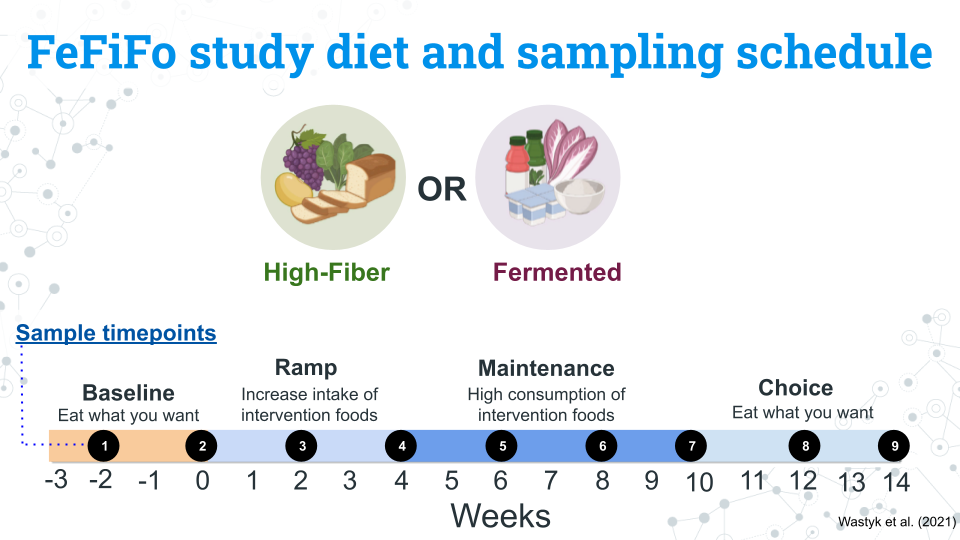
The researchers examined effect of either high fiber (n=18) or fermented foods on the gut microbiome (n=18). Rather than controlling diet entirely through standardized portions, participants were allowed to select what foods they ate so long as these foods were high in fiber or were fermented. Additional metadata was collected from participants including ethnicity, relationship status, employment status, and education level. Similarly to the MISO study, participants had a baseline diet before switching to an intervention diet and finally returned to being allowed to eat whatever they wanted.
7.1.0.1 Some questions to get you started
- How variable is the change of microbiome composition and alpha diversity across individuals? Do all individuals change the same amount or are there some individuals much more sensitive to their chosen food group?
- What are the most abundant microbes in each treatment (fiber, fermented)? Are they similar taxa or different?
- Is there any relationship between ethnicity, education, employment, relationship status and microbiome composition and/or alpha diversity?
- Are the subject’s microbiomes at a given timepoint similar to each other? Similar to other samples from the same subject no matter the timepoint?